
 Image 1 of 3
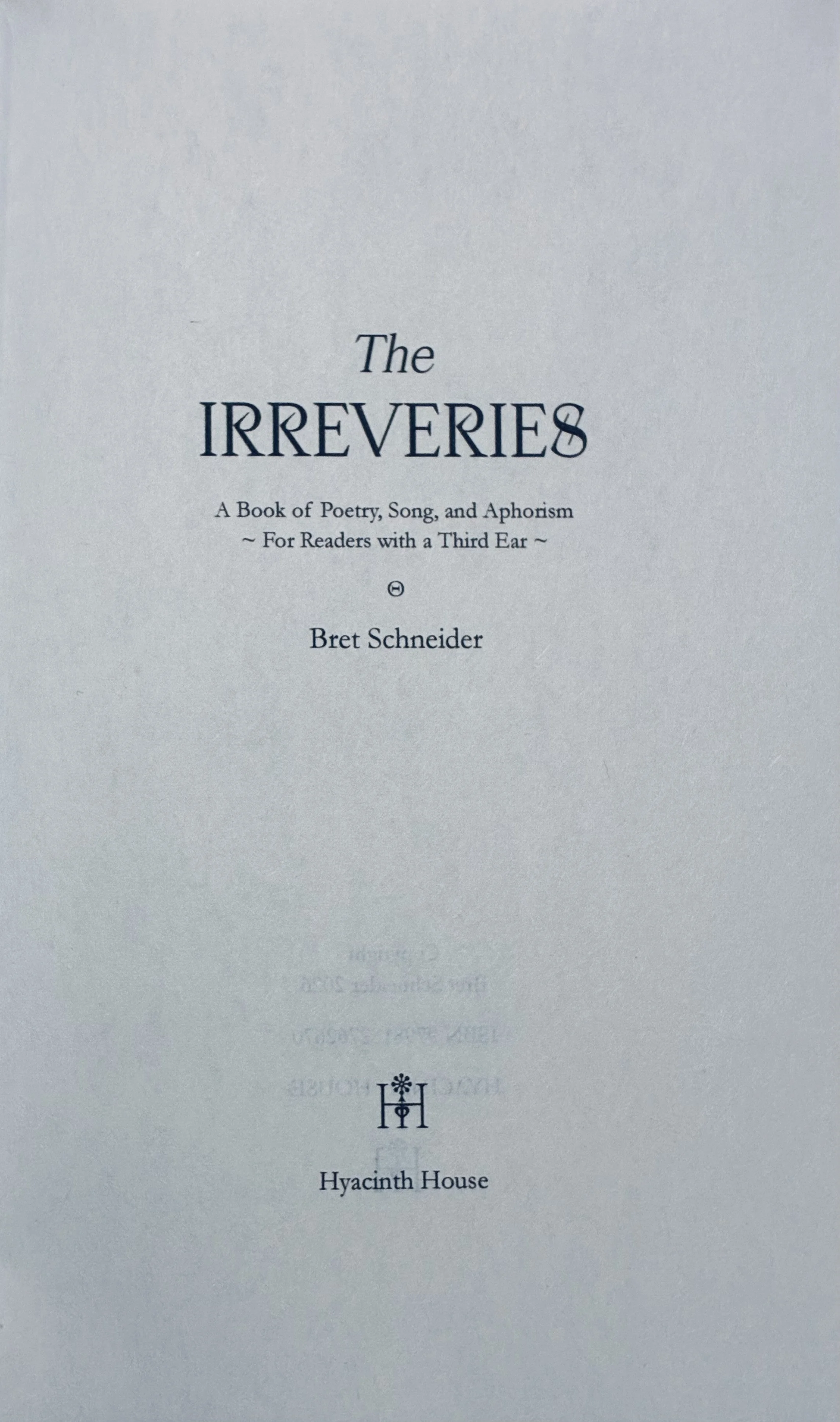 Image 2 of 3
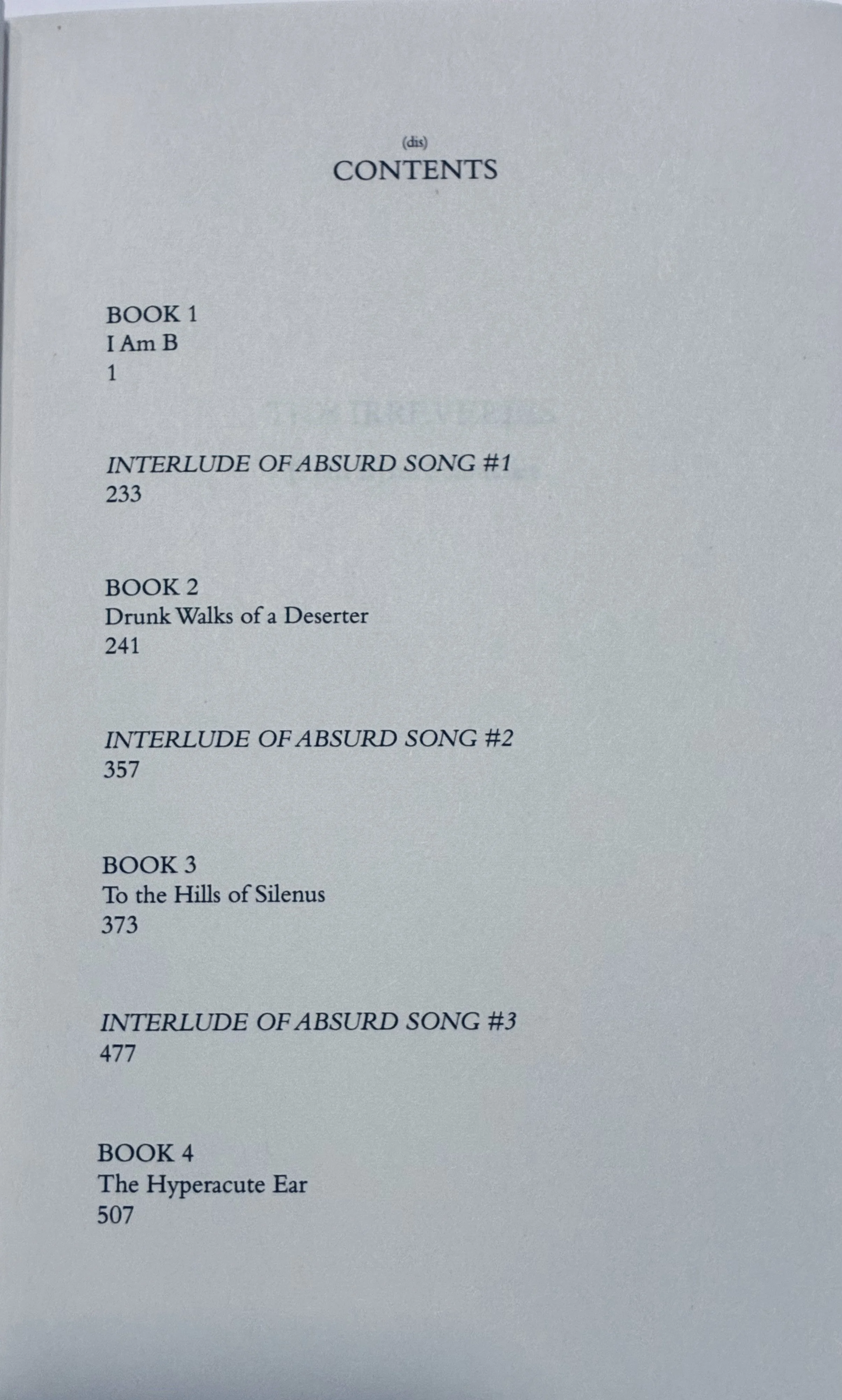 Image 3 of 3
A Book of Poetry, Music, and Aphorism
~ For Readers with a Third Ear ~
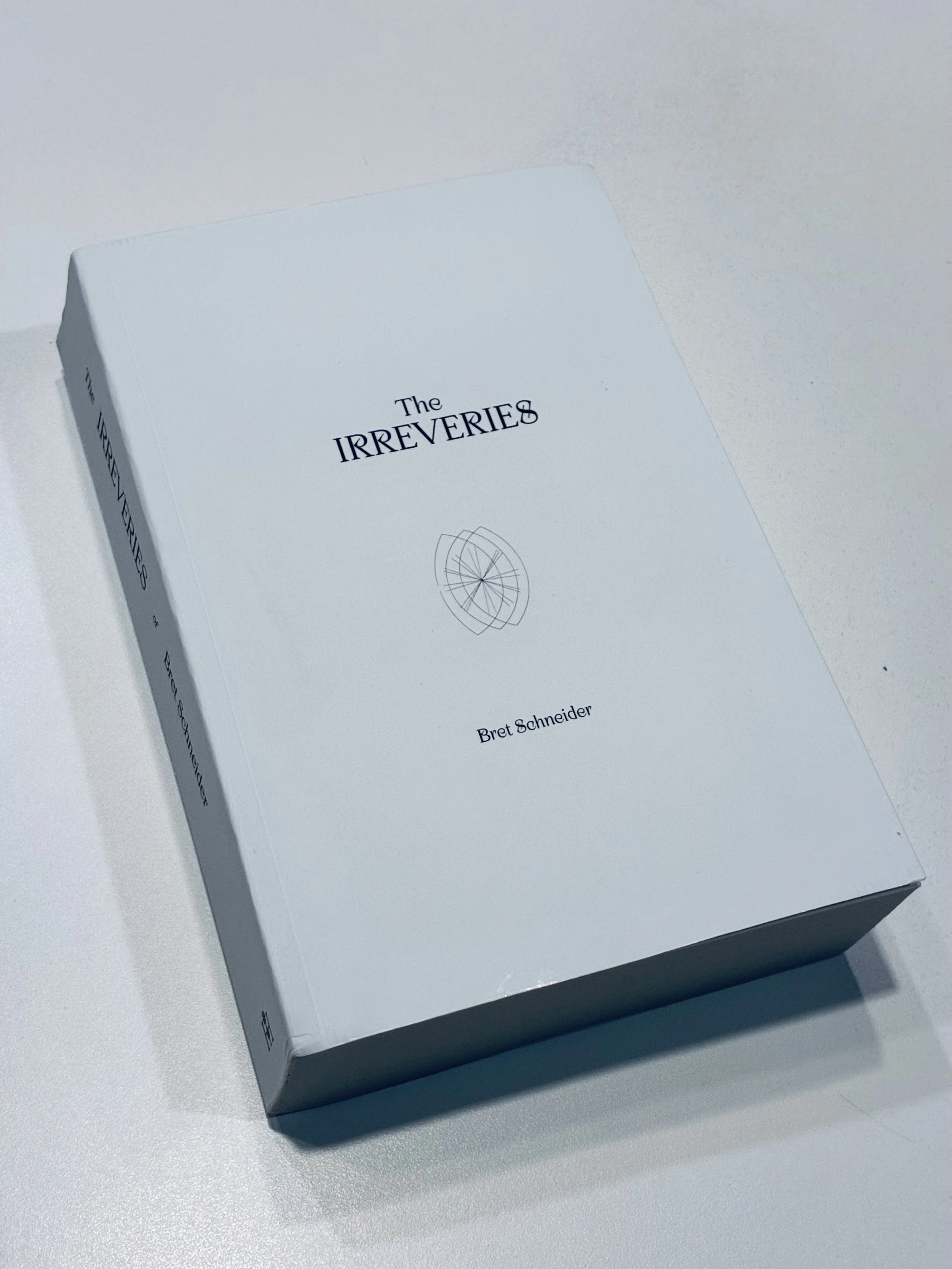
A broken epic poem, spanning 4 books & 3 interludes of absurd textual scores, The Irreveries has been over 20 years in the making. An attempt to find harmony in alienation, the poet-musician wanders through an American high lonesome thing, with little but his gay science and a toolkit of lyrical forms, ranging from Iambic blame poetry, Cynghanedd chiming, Romantic lyricism, Beckettian iteration, American free verse, conceptual texts, criticism fragments, allegories, parables, haiku ... etc! And yet, what artist doesn't want to create their own distinct form? Here it is, you guessed it, the Irreverie.
The Irreveries explores an ideal of a musical writing, what Nietzsche called a '“third ear”. Music-electrical images of oscillation and potential resonate throughout, a motivic force nagivating the various emotional disorders of the millennial era. The Irreveries is also inspired by the American epic poem tradition of Whitman and Zukovsky, meaning it'll be a life's ongoing songbook, with perennial additions, retractions, abstractions, subtractions, and editions. This first edition coming in at ~600 pages, The Irreveries may be it's the airiest, lightest voluptuous book you read. Perhaps most importantly, it manages, almost miraculously, to stay completely irreverent to the predominant discourse.